
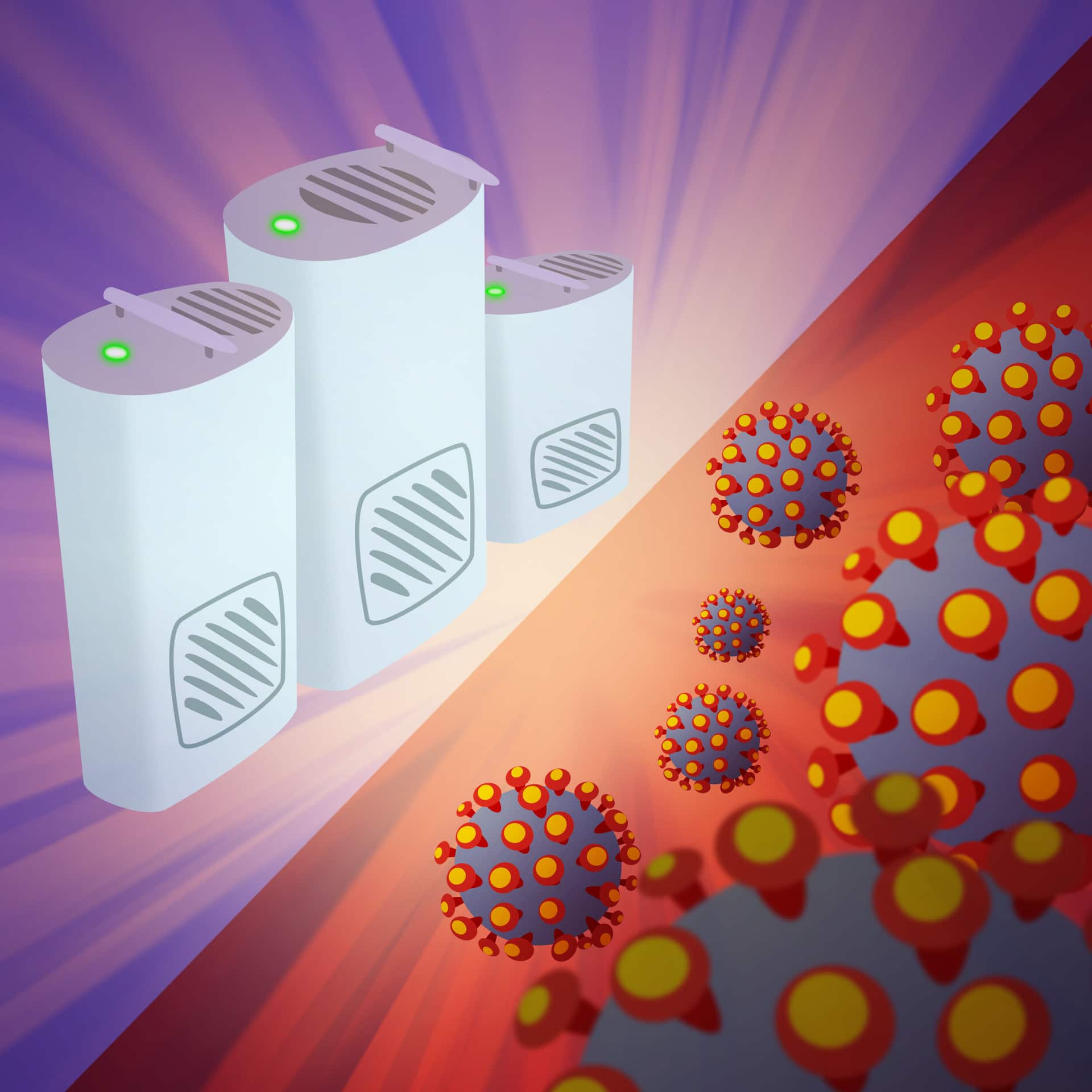
The ever-present threat of COVID-19 is something that we should always still be mindful of. One year into the pandemic, we cannot let our guard down, especially with the economy now reopening. But while masks, alcohol, and social distancing are now the new normal, we can add one more weapon in the fight against this deadly virus: light.
Specifically, Ultraviolet-C or UV-C light.
What is UV-C light?
As defined by the US Food and Drug Administration (FDA) in their website, UV-C radiation is the highest energy portion of the UV radiation spectrum. It also has the shortest wavelengths compared to the other forms of UV light, that being UV-A (which has the longest, and can penetrate the middle layer of the skin) and UV-B (which has a shorter wavelength, and only able to reach the outer layer of the skin.)
UV-C radiation does not reach our planet’s surface because it is blocked by our ozone layer. So the only way for people and viruses to be exposed to it is through artificial means.
How effective is UV-C against viruses?
Experts agree that UV-C light can deactivate viruses. The FDA states in their website that UV-C works by destroying the outer protein coating of the SARS-Coronavirus, and is also an effective way to combat the SARS-CoV-2 virus, which causes the COVID-19 disease. It is also stated to be more effective than UV-A and UV-B radiation.
This is why the use of UV-C lamps and other UV-C systems is recommended by the FDA as well, in addition to the numerous other means of fighting COVID-19.
Is UV light safe?
Ultraviolet light in itself is dangerous, and can cause various complications if not harnessed properly. UV-C specifically can cause skin burns and temporary eye injuries if direct contact happens.
However, used correctly, it is very effective. As long as the system properly houses the UV-C light, and other safety measures are in place, this kind of exposure should be minimized if not outrightly eliminated, unless the system suffers a catastrophic malfunction.
How to select the correct UV-C system
It is important to know what the specs of a UV-C system are in order to ensure that not only is it effective, but also actually safe for use.
Here are some things to look out for when browsing UV-C disinfection systems:
- UV-C wavelengths – check the wavelengths used by the system. Not all UV-C lamps and purifiers are the same, and can use anywhere between 254nm to 222nmn UV-C wavelengths.
- The kind of bulb used – there are different kinds of bulbs available when considering using UV-C systems. Some use low-pressure mercury, others use Excimer or Far-UV-C, while others use Pulsed xenon and LED. Depending on the kind of bulb used, wavelengths and reach will vary, making some more effective than others.
- Is it light exposure or air purifying – UV-C lamps rely on exposing surfaces directly to UV-C light, which can deactivate the viruses on said surfaces. However, this can cause side-effects if people are exposed to the light itself. Thus, it is important that those using this system know the risks and how to properly use the lamp.UV-C air purifiers on the other hand contain the UV-C light in a smaller space and instead purify the air by deactivating the viruses that get exposed to the light source through a circulation system. It is constantly taking in possibly infected air, and re-releasing cleaner, virus-free air.
Conclusion
While UV-C systems are not the end-all, be-all solution in the fight against COVID-19, it is certainly one of the most effective and convenient weapons to use on top of our arsenal of safety protocols. Consider using a UV-C system like our UltraVCare Air Purifier for worry-free, hassle-free disinfecting.