
Now more than ever, with the threat of COVID-19 looking to be ever-present, it is very important to make sure that our homes and our businesses are as clean and as safe as possible. We have already discussed before that UVC is useful in stopping coronavirus and that we should be careful in choosing what kind of UV products to use since most UVC LED products don’t work but are sold as effective anyway.
Having said that, one of the most effective ways of utilizing UVC for sterilization is with the use of UVC air sterilizers. But one of the most common complaints about UVC air sterilizers is the smell it produces, one that is of mild concern to some, and quite stressful to others.
What exactly is the smell produced by UVC air sterilizers? And should we really be concerned by it?
How UVC air sterilizers work
Before we can understand what causes the smell produced by UVC sterilizers, we must first understand how UVC air sterilizers work. As mentioned in our previous blog posts, and as corroborated by the FDA article on UVC radiation vs the coronavirus, UVC can inactivate a virus if the virus is directly exposed to the radiation. However, this poses a problem as direct contact with UVC light can cause side-effects for humans.
One safe way to utilize UVC then is by placing them inside air ducts to disinfect the air, or in more practical cases, by having a UVC air sterilizing unit present in the room.
The way this works is simple in principle, but quite complicated in application, which is why not all UVC air sterilizers are the same (or effective for that matter, but we’ll get to this later.)
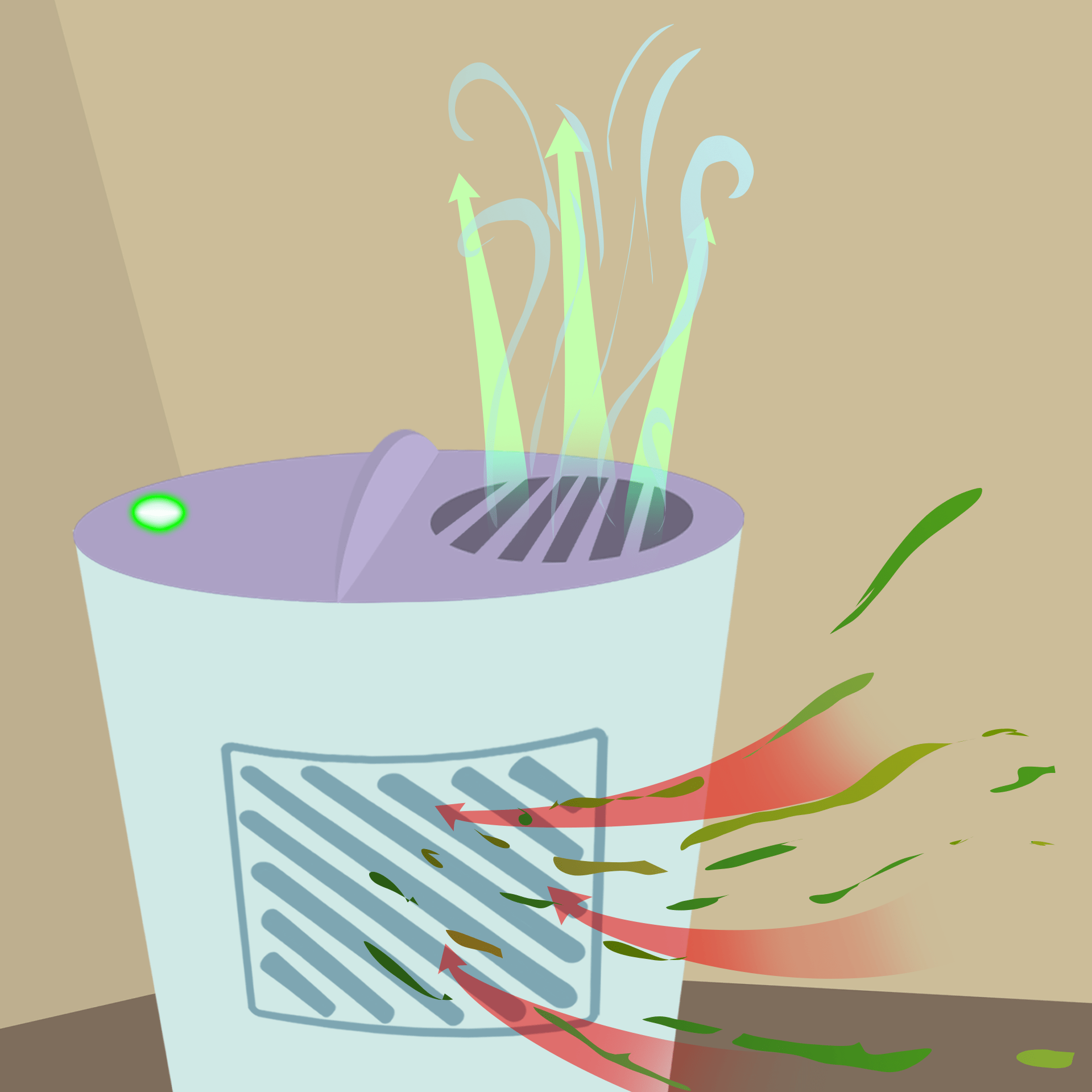
Ambient air is sucked through the unit using a forced air system of sorts, which may vary depending on the make and manufacturer of the UVC air sterilizer. Once the air is inside the unit, it is ventilated through a chamber where it is exposed to UVC light. This chamber is secured, which not only keeps the air inside from leaking out before it has had enough exposure time, but also to contain the UVC radiation within the unit, preventing direct contact to humans. The treated air is then released back out, free of microbes, germs, and viruses.
Now as we mentioned earlier, this sounds very simple in principle. However, there are many factors at play here in order to make sure that the UVC air sterilizing unit is effective.
Key factors in UVC air sterilizer effectiveness
Each UVC air sterilizing unit must abide by what we call the “Holy Trinity” of UV sterilization: Time, Intensity, and Distance.
Time refers to the amount of time that the air, and therefore the viruses, are exposed to the UVC light.
Intensity refers to the strength or the wattage of the UVC light, coupled with the proper wavelength that will be within the range of effectiveness in inactivating viruses.
Distance refers to the exposure area and coverage of the UV light, in order to ensure maximum effectiveness of the UVC lamp.
If a UVC air sterilizer can properly address these, then it is an effective tool in the fight against coronavirus and COVID-19.
Unfortunately, not all UVC air sterilizers are like ours, and instead rely on misinformation that give a false sense of security despite the fact that the product is ineffective. But this is a story for another time
So what’s the deal with the smell?
There have been numerous studies done to figure out exactly what the smell caused by UVC air sterilizers is. In a study done by Normand Brais, Eng., PhD & Benoit Despatis, Eng. it was found that the smell emitted by UVC air sterilizers is caused by UVC light photons breaking the chemical bonds of keratin/cysteine molecules. Keratin is one of the main components of the human skin and a key structural component of human hair and nails.
80% of airborne dust in homes, offices, and other enclosed spaces where humans are typically found is composed of dead human skin and hair, with the rest being other particulates such as pollen, paper, textile, and so on.
In short, what we’re smelling is, by all accounts, just dust being broken down into its base parts.
It’s not as many people falsely claim, ozone being produced. While it is true that one of the main negative side-effects of using UVC light is the production of ozone, which is hazardous to the health when inhaled through the lungs, properly designed UVC systems use special coatings to prevent the production of ozone.
So, is there anything to worry about when it comes to the smell? Assuming that your UVC air sterilizing unit is working as intended, with no damage or malfunctions, then there shouldn’t be any worry at all about the smell of the air.
If you want a worry-free, effective, and powerful UVC air sterilizer, then we can definitely help you. Click here to learn more!